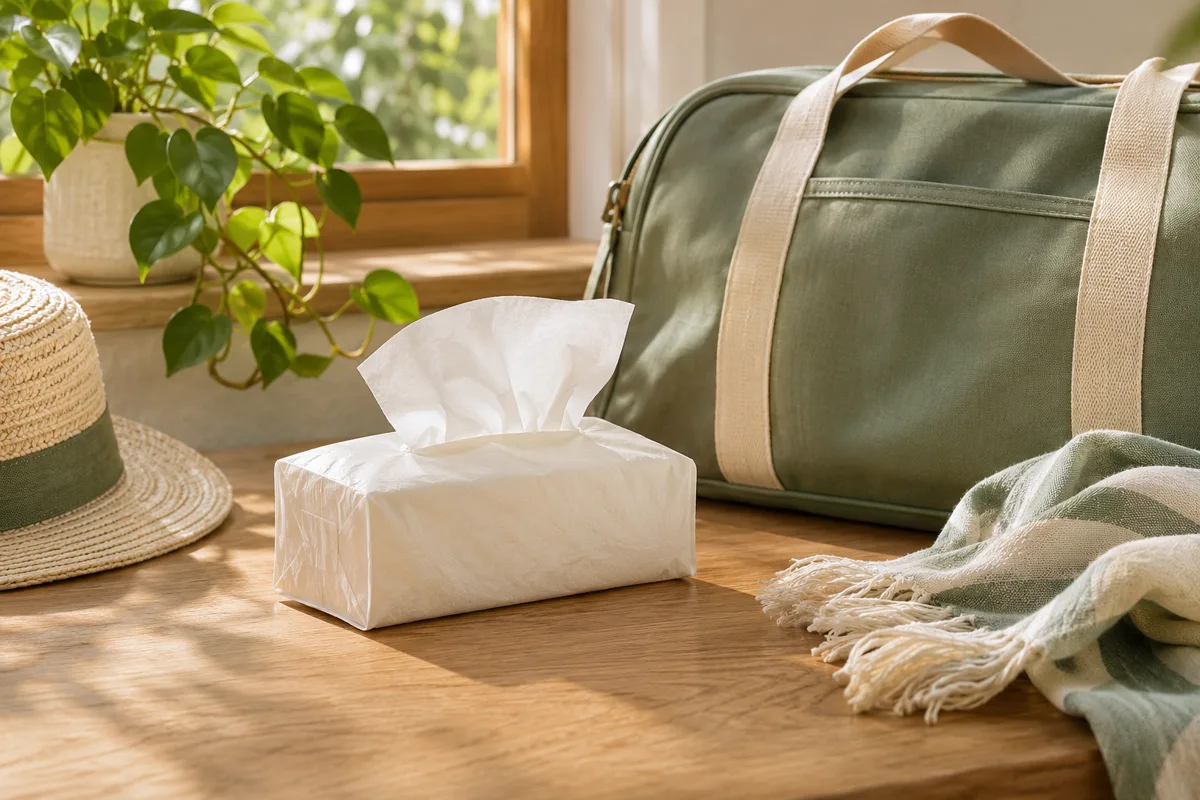
Protect tissues inside your bag
Check whether each pack reseals, whether opening it requires removing a wrapper and how easily one tissue can be taken out. A larger bundle is less useful if the individual packs fall open in a bag.
Keep unused supplies clean
Keep tissues away from leaking liquids and dirty items. A flattened or wet packet should not be treated as a clean reserve. Put used tissues in a bin; do not flush them when traveling or assume unfamiliar plumbing will handle them.
Buy to your observed routine
Count how often you replace packets over a normal commuting week. Use that observation to choose a replenishment quantity instead of buying a large case simply because the outer pack looks economical.
Before you decide
- Compare total tissues across all packets.
- Check whether each opening reseals.
- Use a waste bin rather than flushing tissues.
Sources & scope
Checked November 4, 2026. Official references support specific label, quantity or disposal guidance; household workflows are editorial suggestions. No current retail prices were sampled.
Keep reading
The tissue-box comparison that avoids count confusion ↗
Lotion tissues, plain tissues and fragrance: a label checklist ↗